How to Compress Photos to Fit Gmail's 25MB and Outlook's Attachment Limits
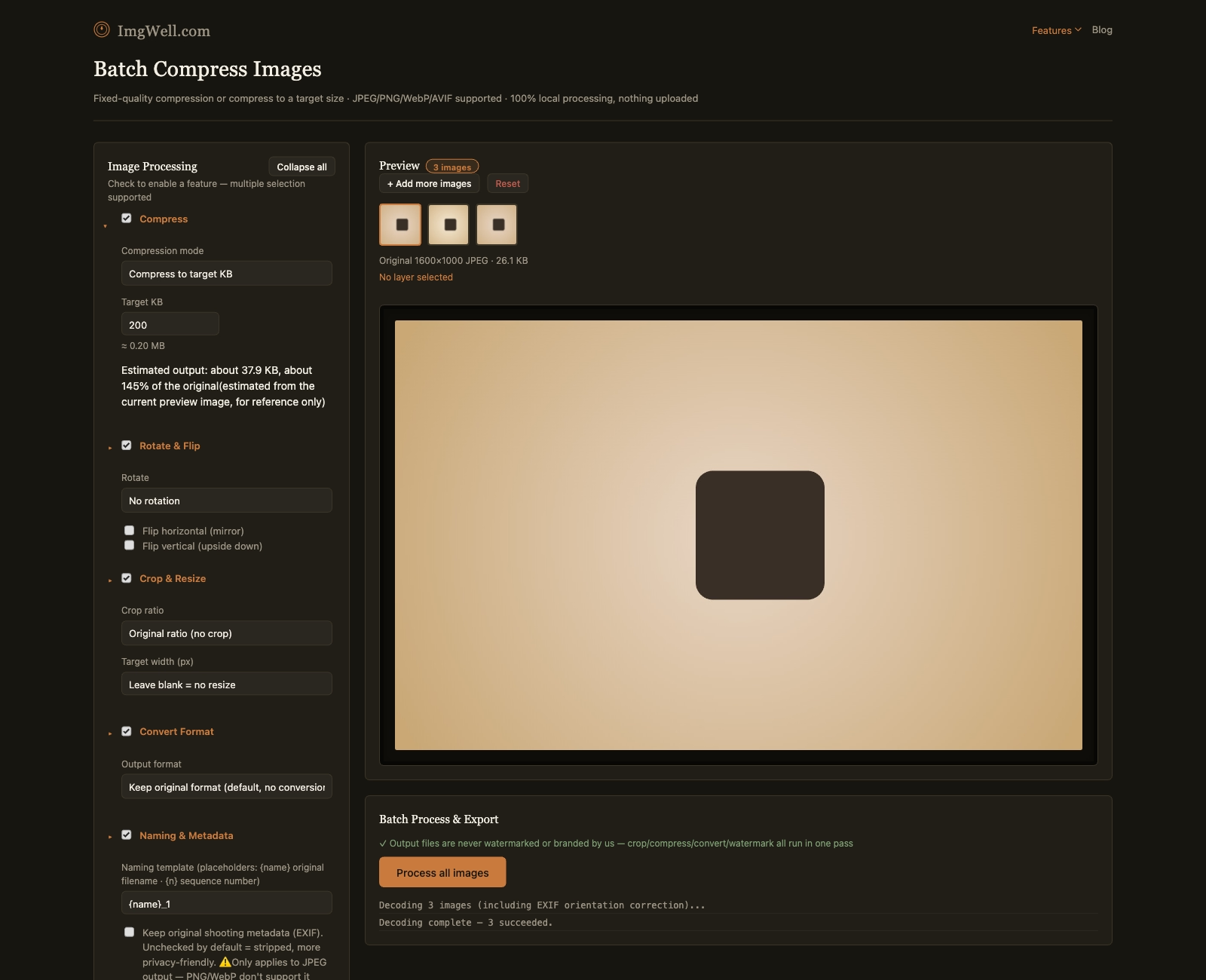
“Message too large” or a stalled upload bar is almost always the same problem: too many photos, not compressed enough, going through an email provider with a hard size cap. Here’s what those caps actually are, and how to fix it for a whole folder at once instead of removing photos one at a time until it sends.
The actual attachment limits
- Gmail: 25MB per email, combined across all attachments. Gmail will silently switch to a Google Drive link instead of a direct attachment once you cross this, which isn’t always what you want if the recipient doesn’t use Google Drive.
- Outlook.com / Microsoft 365: 20MB by default (some Microsoft 365 business plans raise this to 25MB or higher, depending on admin settings).
- Yahoo Mail: 25MB.
- iCloud Mail: 20MB, but Apple’s Mail Drop feature can push much larger files through iCloud links instead of true attachments.
A single modern phone photo is commonly 3–8MB. Attach five or six of them straight off a recent phone and you’re already at or past most of these limits — before you’ve even gotten to a “few photos from the whole event.”
Why phone photos are the usual cause
Phones have been shooting at higher resolutions and less aggressive compression every year — a photo that would have been 1–2MB a few years ago is routinely 4–8MB now on a recent flagship phone. Nothing about the photo looks different at that size; the extra megabytes are mostly headroom you don’t need for something that’s going to be viewed on a screen, not printed at full resolution.
Fitting a batch of photos under a size limit
This is what target-size compression is built for — instead of guessing at a quality percentage and checking the result, you set the actual limit you need and the tool works backward from there.
- Import the whole batch you’re planning to send (folder import works, so you don’t have to pick files one at a time).
- Open Compress, switch the mode to Compress to target KB, and set a target — for a batch of 5 photos going through Gmail’s 25MB cap, something like 4000KB (4MB) per photo leaves comfortable room.
- Process the batch. Every photo comes out at or under your target size, ready to attach as a group.
One thing worth knowing: extremely detailed or noisy photos may not compress below a certain size no matter how low the quality setting goes — if a handful of images in a batch don’t make the target, that’s the content itself being resistant to compression, not a setting to push further. In that case, splitting the batch across two emails is usually faster than chasing a smaller number on one specific stubborn photo.